

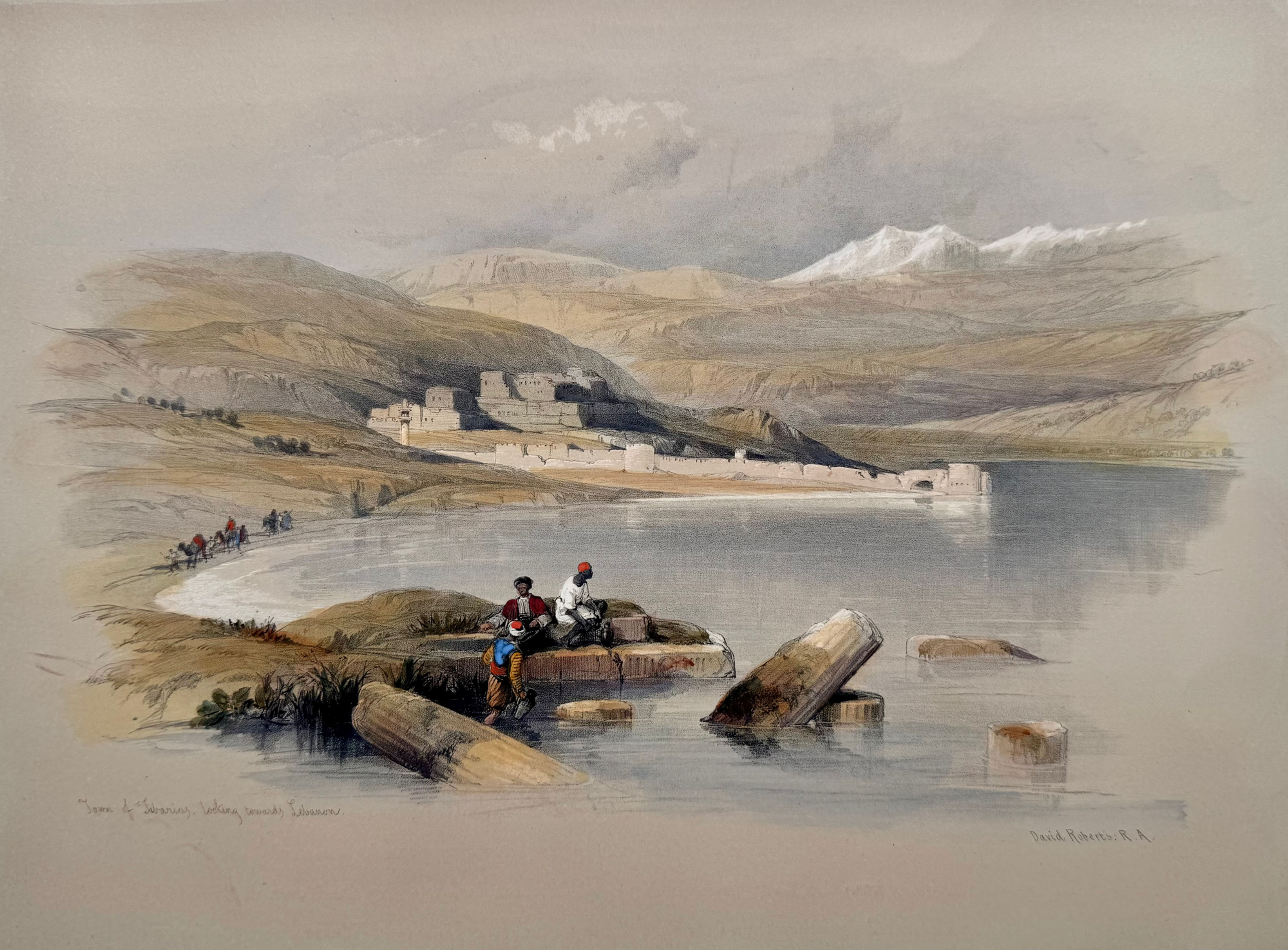

Plate 35 Town of Tiberias looking towards Lebanon - After David Roberts
Roberts reached Tiberias on the 21st April 1839 and wrote in his journal 'To the south the Jordan flows from the lake to the Dead Sea, and close to the lake lies the ancient town of Tiberias, which, with 400 of its inhabitants, was destroyed by an earthquake some years since...the ruins of of a small mosque stand near the entrance to the town, and we passed to-day the foundations of more than one ancient city with excavations in the rocks.' [1]
The view that Roberts has drawn of the 'city and the lake, set beneath the snowy peaks of the mountains of Lebanon, may be visually striking, but it is also quite important in historical terms. Roberts, in fact, believed that the ruins that can be seen in the foreground were the remains of the ancient baths of Tiberias. This hypothesis is supported by the presence of numerous hot springs in the immediate vicinity. In Hebrew, these springs are called Hame Tverla, and they are said to have astonishing qualities for the treatment of rheumatism.' [2]
The city of Tiberias today is known as a winter spa and a well equipped tourist attraction. It was founded originally in 26 B.C. by Herod Antipas who was the tetrarch of Galilee and the city's names was meant to honour the emperor Tiberius. The city is also mentioned in the Bible in John 6:23 as the location from which boats had sailed from trying to find Jesus.
The drawings and watercolours from this tour by David Roberts of the Holy Land and Egypt were collated together into folios and released over a seven-year period by the publisher F.G. Moon from 20 Threadneedle Street London. This lithograph was published on August 1st 1844.
Medium: Original First Edition Lithograph, with later hand-colouring on thick woven paper.
Half Plate 35.
Inscribed l.l. 'Town of Tiberias looking towards Lebanon' and l.r. 'David Roberts R.A.', 24.6 x 34.2 cm, mounted (40.8x 49.8cm).
References:
[1] David Roberts' Journal, 21st April 1839.
[2] Fabio Bourbon (ed). Yesterday and Today: The Holy Land. Swan Hill Press: London, 1997, p.231. Translated by Antony Shugaar.
Condition report: good for its age. A few small markings and time staining, please see photos. Recently put into a new acid free mount. There is a small mark at the bottom of the mount below the inscription in the centre.